Artificial Intelligence
in Education
Opportunities and Challenges
Transforming the Future of Teaching and Learning Through Artificial Intelligence
Created By
Mahewish Arif Shaikh
H.G.M Azam College of Education
Dr. P.A. Inamdar University
Pune, Maharashtra, India
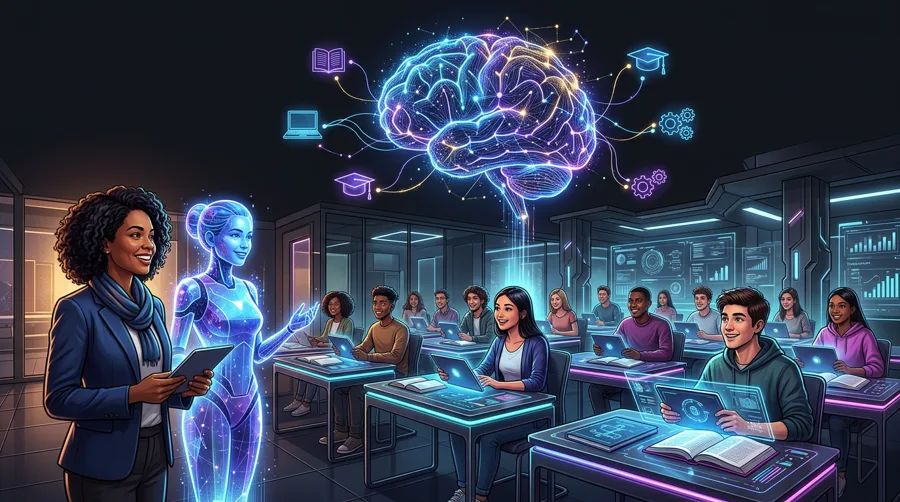
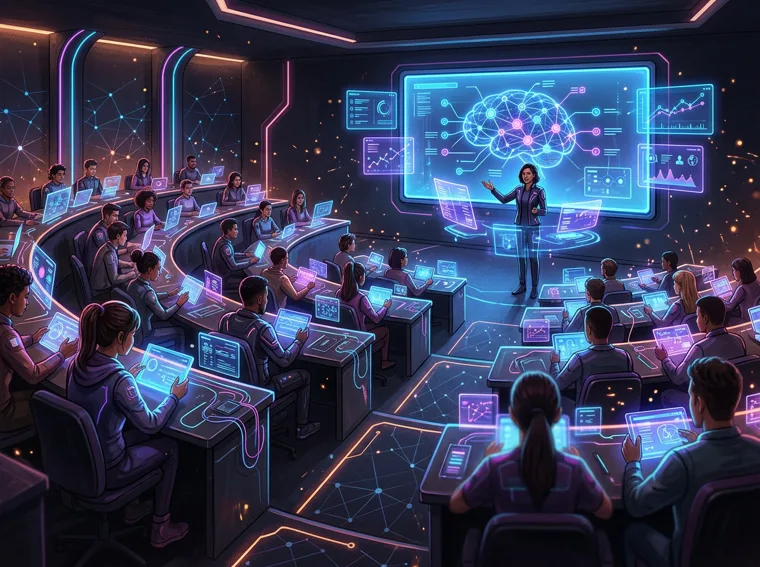
Where Human Teaching Meets Machine Intelligence
What is Artificial Intelligence?
Artificial Intelligence (AI) refers to computer systems built to perform tasks that typically require human intelligence — recognising patterns, understanding language, and learning from data — rather than following one fixed set of instructions.
What is AI in Education?
AI in Education (AIEd) is the application of these intelligent systems to teaching, learning and administration: intelligent tutoring systems, adaptive learning platforms, automated grading tools and AI chatbots that support students and teachers alike.
Why is AI becoming important in education?
Classrooms serve learners with very different paces and needs, while teachers face growing administrative loads. AI matters because it personalises instruction at a scale no single teacher could manage alone, freeing time for mentoring and creativity.
How is AI changing traditional teaching?
Traditional education largely follows one uniform pace for the whole class. AI is shifting this toward learning paths shaped around each student’s progress — offering instant feedback and real-time data to guide instruction.
AI in Education — How It Works
Eight capabilities that show how artificial intelligence actually operates inside a classroom, from the tutor a student meets online to the analytics a teacher checks each morning.
AI Tutors
Virtual tutoring systems answer questions, explain concepts step by step, and adjust their approach to how each student learns best.
Personalized Learning
Algorithms analyse a learner’s pace, strengths and gaps to recommend content suited to that individual rather than a fixed curriculum.
Intelligent Assessment
AI evaluates assignments and open-ended answers, identifying patterns of error that show teachers exactly where a student is struggling.
AI Chatbots
Conversational assistants answer routine academic questions instantly, reducing wait times for students and easing staff workload.
Learning Analytics
Dashboards translate raw activity data — time spent, attempts made, topics revisited — into insights teachers can act on early.
Smart Classrooms
Connected devices, interactive boards and sensors create responsive environments that adapt pacing and content in real time.
Adaptive Learning
Platforms continuously adjust the difficulty and sequence of material based on performance, keeping tasks challenging but achievable.
Automated Feedback
Students receive immediate, specific feedback on their work instead of waiting days, while the material is still fresh in mind.
Opportunities
AI opens doors that traditional classrooms, working alone, have struggled to reach for decades — from truly individual pacing to support available at any hour.
Personalized Learning
Every learner follows a pace and pathway suited to their own ability, not the average of the class.
Better Student Engagement
Interactive, adaptive content keeps learners curious far longer than static textbooks and one-way lectures.
Instant Feedback
Mistakes are corrected the moment they happen, turning every exercise into an immediate lesson.
Automated Assessment
Routine grading finishes in seconds, returning hours to teachers for planning and mentoring.
Support for Teachers
AI absorbs repetitive administrative work, freeing teachers to focus on guidance and classroom relationships.
Accessibility & Inclusion
Text-to-speech, captioning and translation tools open classrooms to students of every ability and language.
Intelligent Tutoring Systems
Software tutors offer one-on-one style guidance to students who lack access to private tuition.
Learning Analytics
Early-warning signals flag disengagement so teachers can step in before a student falls behind.
Language Learning
AI-powered translation and pronunciation tools give learners judgement-free practice in a new language.
Administrative Efficiency
Scheduling, attendance and record-keeping are streamlined, cutting the paperwork burden on institutions.
24/7 Learning Support
Students can ask questions and revisit material at any hour, well beyond the school timetable.
Challenges
Every gain in automation raises a question of equity, ethics or trust. A responsible rollout of AI in education has to face these directly, not around them.
Data Privacy & Security
Educational AI collects sensitive student data, and any weakness in storing it creates a real risk of misuse.
Digital Divide
Students without reliable internet or personal devices fall further behind as AI-based tools become common.
Dependence on Technology
Over-reliance on AI tools can weaken a student’s ability to work independently when technology fails.
Lack of Human Interaction
Excessive automation can reduce the face-to-face guidance and emotional support only a teacher can give.
Bias in AI Systems
Models trained on unrepresentative data can unintentionally disadvantage certain groups of students.
Accuracy & Misinformation
AI-generated explanations are not always correct, and students may struggle to spot subtle errors.
Teacher Training Requirements
Educators need structured training to use AI well, and many institutions lack the time to provide it.
Ethical Concerns
Questions of consent, surveillance and the limits of automated decisions in education remain unresolved.
Cost of Implementation
Licensing platforms, upgrading infrastructure and training staff demand serious financial investment.
Academic Integrity & Cheating
Generative AI makes it easier to submit work without genuine understanding, challenging assessment methods.
Risk to Creativity & Critical Thinking
Leaning on ready-made AI answers can discourage the independent reasoning education aims to build.
AI vs Traditional Education
AI does not erase the traditional classroom — it changes how quickly a student is understood, and how quickly they receive help.
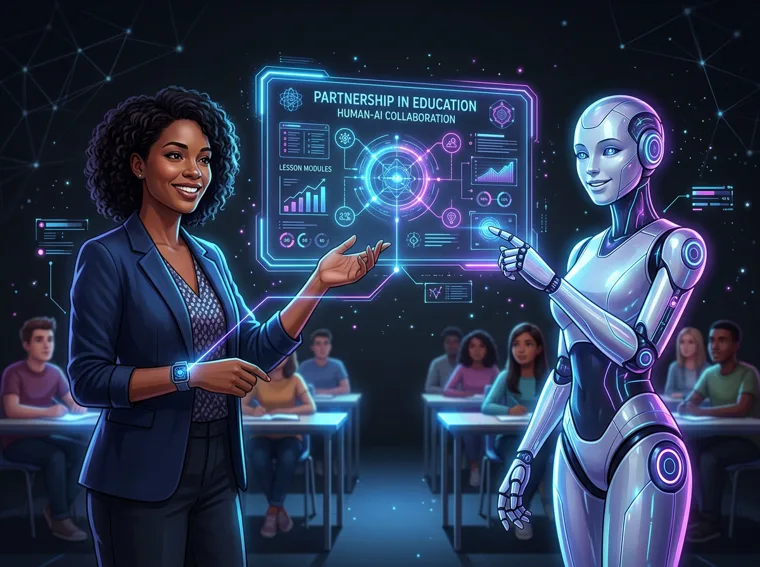
AI should support teachers, not replace them.
The Role of Teachers in the Age of AI
No algorithm replaces the trust between a student and a teacher who knows their story. As AI takes over repetitive academic tasks, the teacher’s role shifts — but does not shrink — toward the human qualities no machine can replicate.
Benefits for Students
What changes for a student, day to day, once AI is part of the classroom rather than a novelty in it.
Personalized Learning
Lessons adjust to how you learn best, not the average pace of the classroom.
Individual Learning Paths
Recommended topics and exercises follow your own progress, not a generic sequence.
Instant Feedback
See what you got right or wrong immediately, while the material is still fresh.
Global Learning Resources
Access course material and reference libraries from institutions around the world.
Accessibility
Captioning, translation and read-aloud tools make material available to every kind of learner.
Creativity
AI tools for brainstorming and drafting free up time to focus on original ideas.
Research Skills
Smart search and summarisation tools teach students to evaluate sources, not just collect them.
Progress Tracking
Visual dashboards show growth over time, making it easier to set and reach learning goals.
Ethical Use of AI
Technology earns its place in a classroom only when it is used with care. These principles set the boundary between AI that helps and AI that harms.
Responsible AI
Deploying AI tools with clear purpose, oversight and accountability at every stage.
Privacy
Protecting student data with strict access controls and minimal collection.
Transparency
Making clear when and how AI is being used in a student’s learning journey.
Fairness
Auditing systems so no group of students is systematically disadvantaged.
Human Supervision
Keeping a qualified educator in the loop for every consequential decision.
Academic Honesty
Setting clear boundaries for acceptable AI use in assignments and exams.
Digital Citizenship
Teaching students to use online and AI tools safely, critically and respectfully.
Responsible Use of AI Tools
Encouraging AI as a starting point for thinking, never a substitute for it.
The Future of AI in Education
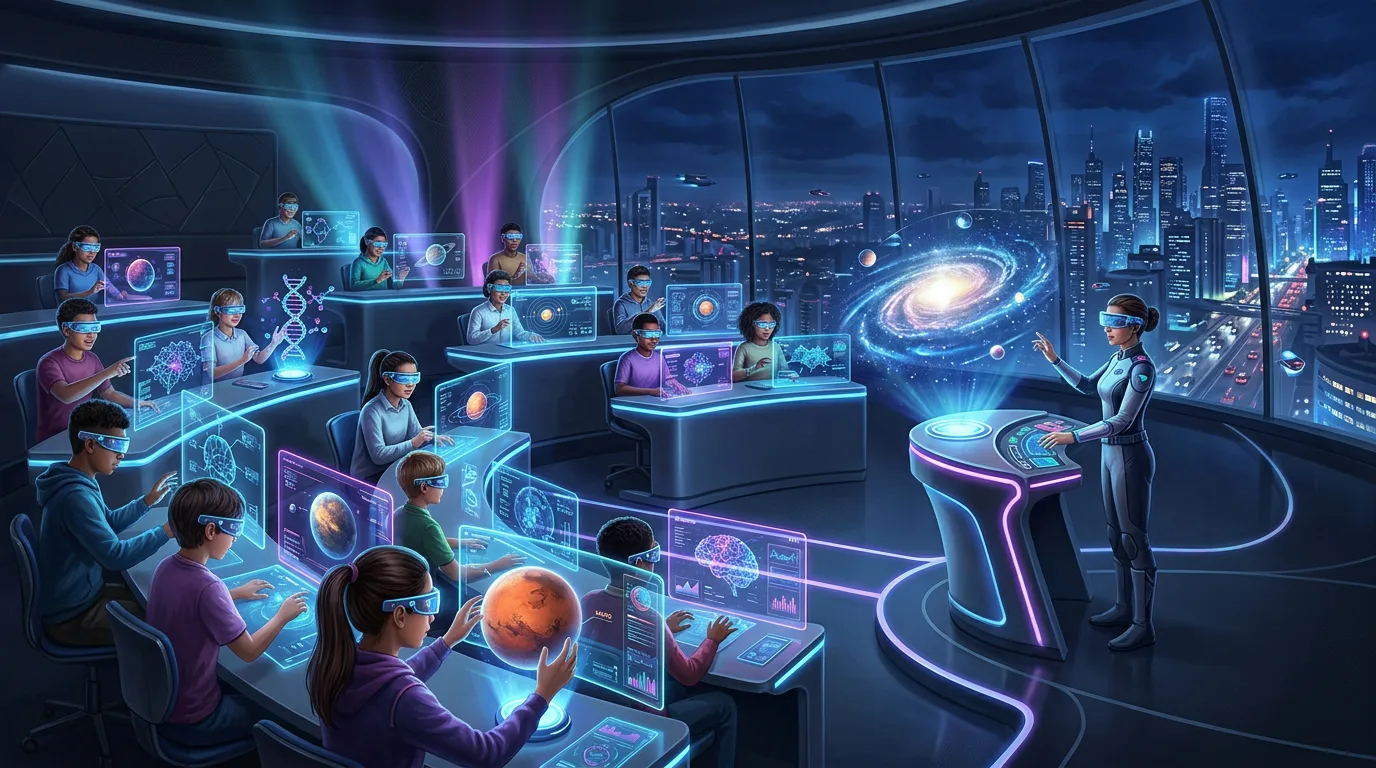
A glimpse at the classroom taking shape now: immersive, data-aware, and still led by a teacher at the front of the room.
AI-Powered Classrooms
Rooms that sense engagement and adjust lesson pacing without interrupting the teacher’s flow.
Virtual Tutors
Always-available digital tutors that supplement, rather than substitute, classroom instruction.
Intelligent Learning Platforms
Unified systems that connect content, assessment and analytics into one adaptive experience.
Augmented & Virtual Reality
Immersive simulations that let students explore concepts too costly or distant to visit in person.
Personalized Education
Curricula that reshape themselves continuously around each learner’s evolving needs.
AI-Assisted Teachers
Educators supported by real-time insight into every student, without losing the human lead role.
Smart Assessment
Evaluation that looks beyond final answers to how a student actually reasoned their way there.
Lifelong Learning
Learning platforms that follow a person from school through career, not just one academic term.
Artificial Intelligence can transform education, but the human connection between teachers and learners remains at the heart of education.
Closing Thoughts
Artificial Intelligence carries real potential for education — personalising instruction, easing teacher workload, and widening access to quality learning for students who may never have had it. Realising that potential responsibly means protecting student data, training educators well, and closing the digital divide rather than widening it. Implemented with care, AI becomes an ally to inclusive, ethical and effective education, not a shortcut around it.
AI is not the replacement for a teacher; it is a powerful tool that can help teachers teach better and help learners learn better.
Behind This Project


Mahewish Arif Shaikh
Student · Teacher Education